

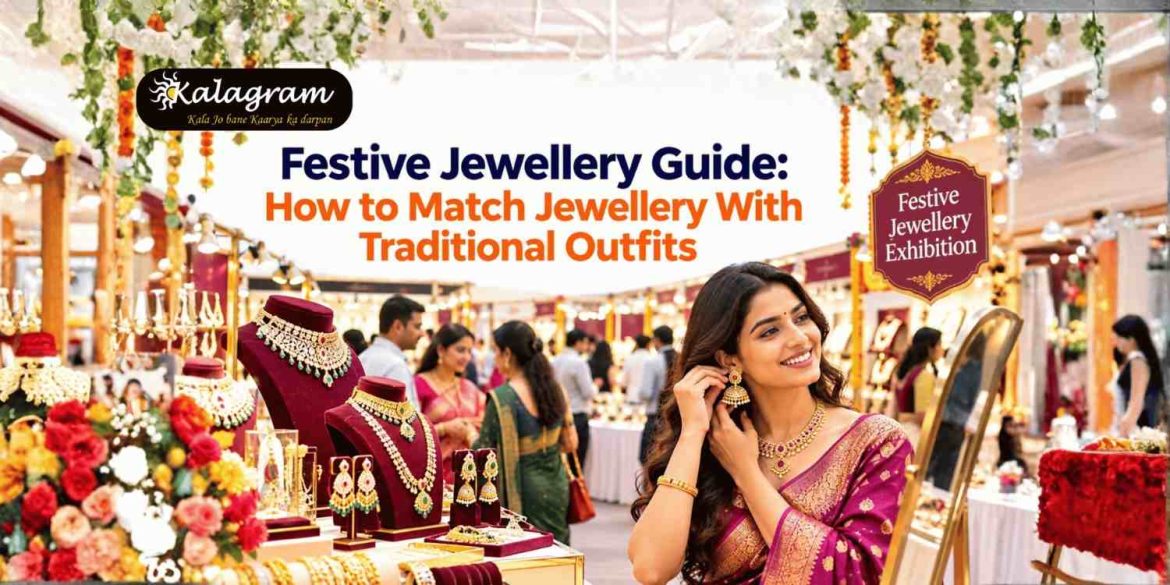
Festive Jewellery Guide: How to Match Jewellery With Traditional Outfits
Summary – Choosing the right jewellery can transform a simple traditional outfit into an elegant festive look. Whether you are wearing a Paithani saree, Banarasi silk saree, lehenga, or a simple handloom outfit, the secret is to balance jewellery with your clothing’s colour, fabric, neckline, and occasion. Traditional Indian jewellery such as Kundan, Polki, temple jewellery, oxidised silver, and handcrafted accessories offer plenty of styling options. This festive jewellery guide explains how to choose the right earrings, necklaces, bangles, and accessories to complement your ethnic wear while celebrating the beauty of Indian craftsmanship.
Jewellery is an important part of Indian festive fashion. It adds character to traditional outfits, highlights their details, and helps create a complete appearance for celebrations, weddings, family functions, and festivals.
However, matching jewellery does not mean wearing accessories in exactly the same colour as your outfit. It means creating a balanced combination of designs, materials, colours, and textures.
For example, a richly woven Paithani saree already has beautiful traditional motifs and borders. Pairing it with elegant gold-tone jewellery can enhance its appearance without making the outfit look too heavy.
Similarly, a simple cotton saree can look more festive when paired with oxidised silver earrings or a handcrafted statement necklace.
How to Match Jewellery With Different Types of Traditional Outfits?
Different fabrics, patterns, and outfit styles need different jewellery combinations. Understanding these combinations can help you choose accessories that complement your traditional clothing.
Jewellery for Traditional Silk Sarees
Silk sarees are popular for weddings, Diwali, religious celebrations, and family functions. Their rich fabric and decorative borders pair beautifully with traditional jewellery.
Consider gold necklaces, temple jewellery, Kundan sets, traditional jhumkas, and matching bangles. If your saree has heavy zari work, choose elegant jewellery that complements its design rather than competing with it.
Jewellery for Paithani and Banarasi Sarees
Paithani and Banarasi sarees are known for their traditional weaving, beautiful borders, and distinctive patterns. Paithani sarees, in particular, hold a special place in Maharashtra’s textile heritage. Their traditional designs and regional identity are also recognised in the official GI record.
For Paithani sarees, try traditional gold-tone necklaces, peacock-inspired earrings, temple jewellery, and green or ruby-coloured accessories. With Banarasi sarees, Kundan jewellery, Polki necklaces, chandbalis, and layered gold-tone necklaces can create a graceful festive look.
Jewellery for Cotton and Handloom Sarees
Cotton and handloom sarees often feature simpler patterns, beautiful textures, and regional weaving styles. They offer plenty of opportunities to experiment with lightweight and artistic jewellery.
Oxidised silver necklaces, tribal-inspired earrings, handmade statement pieces, wooden jewellery, and delicate bangles work particularly well.
For example, a plain handloom cotton saree with a contrasting border can look elegant with large silver jhumkas and a simple bracelet.
Jewellery for Lehenga and Ghagra Choli
Lehengas and ghagra cholis often include embroidery, embellishments, zari work, and decorative patterns.
Chokers, layered necklaces, Kundan sets, Polki jewellery, maang tikka, and statement earrings are popular choices. Match the jewellery weight with the outfit’s detailing so that the overall look remains balanced.
Jewellery for Anarkali Suits, Salwar Kameez, and Kurtis
For Anarkali suits, traditional jhumkas, chandbalis, delicate necklaces, and bangles can create an elegant appearance.
With simpler kurtis and salwar suits, statement earrings or a handcrafted necklace can add a festive touch without making the outfit look over-accessorised.
How to Choose Jewellery According to Your Outfit’s Colour?
Colour coordination is one of the easiest ways to improve your festive styling. You can either choose jewellery that complements your outfit or create an attractive contrast.
Jewellery for Red and Maroon Outfits
Red and maroon outfits pair beautifully with traditional gold-tone jewellery, Kundan sets, Polki accessories, and green gemstone combinations.
For a red silk saree, traditional gold earrings and matching bangles can create a classic festive appearance.
Jewellery for Green and Blue Outfits
Green outfits can look elegant with gold, antique-finish, pearl, and ruby-toned jewellery.
Blue sarees and lehengas work well with silver, diamond-look, pearl, and contrasting Kundan accessories.
Jewellery for Pink and Pastel Outfits
Pastel pink, lavender, peach, and light blue outfits usually look attractive with pearl jewellery, delicate silver accessories, rose-gold finishes, and minimal gemstone designs.
For a light pink silk saree, try pearl earrings with a simple necklace rather than a heavy traditional set.
Jewellery for Black and White Traditional Outfits
Black outfits can create a striking combination with antique gold, oxidised silver, and statement jewellery. White and ivory outfits pair beautifully with pearls, silver, and subtle gold accessories.
Gold, Silver, and Antique Jewellery – Which Should You Choose?
Choose gold-tone jewellery for rich traditional outfits, silver jewellery for cooler colour combinations and handloom clothing, and antique finishes for traditional designs with an old-world appearance.
There is no strict rule that you must match every metal with a particular fabric. Consider the outfit’s embroidery, colour, and personal style.
How to Match Jewellery With Your Outfit’s Neckline?
Your blouse or outfit neckline plays an important role in choosing necklaces and earrings.
- Deep neck and V-neck blouses: Pendants, layered necklaces, and medium-length necklaces can complement these necklines.
- High-neck blouses: Statement earrings, chandbalis, and ear cuffs can work beautifully without requiring a heavy necklace.
- Round-neck blouses: Chokers and traditional necklaces that sit comfortably around the neckline are good options.
- Boat-neck blouses: Statement earrings and shorter necklaces can create an elegant combination.
- Contemporary blouse designs: Choose jewellery according to the neckline and embellishment rather than following traditional combinations automatically.
One useful styling rule is to balance statement accessories. When wearing large earrings, consider a simpler necklace. When your necklace is the main attraction, choose smaller earrings.
Popular Types of Traditional Indian Jewellery for Festive Occasions
Indian traditional jewellery includes different designs, materials, and regional influences. Understanding popular jewellery styles makes it easier to choose accessories for different outfits.
Kundan Jewellery
Kundan jewellery features decorative gemstones set in traditional designs. It pairs well with silk sarees, lehengas, and heavily embroidered ethnic outfits.
Polki Jewellery
Polki jewellery traditionally features uncut diamonds and is popular for elaborate festive and wedding looks. It works beautifully with traditional silk outfits and statement ensembles.
Temple Jewellery
Inspired by Indian temple art and religious motifs, temple jewellery commonly features traditional gold designs, deities, flowers, and decorative patterns. It complements Paithani sarees, Kanjivaram sarees, and other traditional outfits.
Oxidised Silver Jewellery
Oxidised silver jewellery is a versatile choice for cotton sarees, handloom outfits, kurtis, and bohemian-inspired ethnic wear.
Meenakari Jewellery
Meenakari jewellery is known for its colourful enamel work and decorative detailing. It can complement traditional sarees and festive outfits with matching or contrasting colours.
Pearl and Gold Jewellery
Pearl and gold combinations create a graceful appearance and are suitable for family celebrations, festive dinners, and traditional occasions.
Handmade and Artisan-Crafted Jewellery
Handcrafted jewellery offers distinctive designs created using different materials, techniques, and regional influences. Wooden, beaded, metal, textile, and fabric-based accessories can add personality to traditional clothing.
How to Select Jewellery for Different Festive Occasions?
The right jewellery also depends on where you are going. A daytime puja may call for something different from a wedding reception or evening celebration.
Jewellery for Diwali Celebrations
For Diwali, consider gold-tone earrings, Kundan necklaces, traditional bangles, pearl accessories, and lightweight statement pieces. Choose comfortable jewellery that complements your festive saree or ethnic outfit.
For more outfit and accessory planning, you can also refer to this complete Diwali shopping checklist.
Jewellery for Navratri and Garba
Navratri outfits often feature colourful traditional clothing, mirror work, embroidery, and vibrant designs. Oxidised silver jewellery, statement earrings, layered necklaces, and traditional bangles can complement these festive looks.
Jewellery for Weddings and Family Functions
Weddings offer opportunities to wear elaborate traditional jewellery such as Kundan, Polki, temple jewellery, and layered necklaces. Choose the jewellery according to the outfit’s embroidery, neckline, and the formality of the occasion.
Jewellery for Traditional Pujas and Religious Celebrations
For religious occasions, traditional gold-tone earrings, simple necklaces, bangles, and temple-inspired jewellery can create a graceful appearance.
Jewellery for Daytime and Evening Festive Events
For daytime events, lightweight jewellery, pearls, and minimal accessories are comfortable choices. Evening celebrations can accommodate statement necklaces, decorative earrings, and more elaborate jewellery combinations.
Traditional Jewellery Styling Tips: How to Create a Balanced Festive Look?
You do not need expensive jewellery to create a beautiful festive appearance. The key is selecting accessories that complement your clothing and personal style.
Follow these practical styling tips:
- Choose one statement piece: Make your necklace, earrings, or bangles the main attraction.
- Balance jewellery weight: Avoid combining several oversized accessories with heavily embellished outfits.
- Consider fabric and embroidery: Match the style and finish of jewellery with the saree or outfit detailing.
- Pay attention to the neckline: Choose necklaces that sit comfortably and complement the blouse design.
- Coordinate accessories: Consider your hairstyle, footwear, handbag, and other accessories.
- Prioritise comfort: Choose jewellery that you can wear comfortably throughout long celebrations.
For example, a heavily embroidered lehenga may look better with statement earrings and a simple necklace, while a plain silk saree can accommodate a more elaborate necklace.
Common Jewellery Styling Mistakes to Avoid
Even beautiful jewellery can look mismatched when it does not complement the outfit. Avoid these common styling mistakes:
- Wearing heavy necklaces with oversized statement earrings without considering balance.
- Choosing jewellery colours that compete with the outfit.
- Ignoring the blouse neckline when selecting necklaces.
- Matching every accessory too closely instead of creating visual contrast.
- Wearing uncomfortable jewellery during long celebrations.
- Over-accessorising an already heavily embroidered outfit.
Remember, good festive styling is about balance, not the number of accessories you wear.
Where to Explore Traditional and Handcrafted Jewellery in Pune?
If you enjoy discovering unique jewellery and traditional fashion, visiting local exhibitions can be an interesting shopping experience. Pune has a vibrant market for ethnic fashion, handloom products, handicrafts, and independent creative businesses.
Benefits of Shopping at Jewellery and Fashion Exhibitions
Exhibitions bring different designers, sellers, and creative businesses together in one location. Depending on the participating exhibitors, visitors can explore traditional jewellery, fashion accessories, sarees, ethnic clothing, and handcrafted products.
You also get an opportunity to examine designs, compare collections, and interact with sellers before making a purchase.
Why Explore Handmade and Artisan-Crafted Jewellery?
Handcrafted jewellery often reflects regional artistry, traditional techniques, and individual creativity. Choosing such products can help support independent creators and small businesses while introducing you to distinctive accessories that may differ from mass-produced designs.
Discover Traditional Fashion and Creative Collections at Kalagram Exhibitions
For people interested in exploring traditional fashion, handloom textiles, handicrafts, and creative products in Pune, Kalagram offers curated exhibitions featuring designers, artisans, weavers, entrepreneurs, and independent brands.
With 14 years of experience and more than 60 exhibition seasons, Kalagram provides a platform for creative businesses to showcase their products and connect with wider audiences.
You can visit Kalagram’s Upcoming Exhibitions to check its published event information and upcoming exhibition announcements. Participating product categories vary by event, so check the event details before planning a visit.
Complete Your Festive Look With the Right Jewellery
Traditional jewellery is more than an accessory; it represents Indian artistry, regional craftsmanship, and personal style. Whether you prefer the elegance of temple jewellery, the beauty of Kundan designs, or the simplicity of handcrafted accessories, the right combination can make every traditional outfit more special.
For those looking to discover Indian fashion, handloom, handicrafts, and creative collections in Pune, Kalagram provides opportunities to explore curated exhibitions that bring together artisans, designers, and independent businesses.
Want to explore traditional fashion and creative collections at upcoming exhibitions? Contact Kalagram Exibition to learn about exhibition schedules, visitor information, and participation opportunities. Discover the beauty of Indian craftsmanship and make your next festive look truly memorable.
Frequently Asked Questions About Festive Jewellery Styling
1. How do I match jewellery with traditional Indian outfits?
Consider your outfit’s colour, fabric, neckline, embroidery, and occasion. Choose jewellery that complements these details and avoid wearing too many heavy accessories together.
2. Which jewellery looks best with a silk saree?
Gold-tone jewellery, temple jewellery, Kundan, Polki, and traditional jhumkas are popular choices for silk sarees. Select your accessories according to the saree’s border and embellishment.
3. What jewellery should I wear with a Paithani saree?
Traditional gold-tone necklaces, temple jewellery, peacock-inspired earrings, and matching bangles complement Paithani sarees beautifully.
4. Which jewellery is best for a lehenga?
Kundan necklaces, Polki sets, chokers, chandbalis, layered necklaces, and maang tikka are popular jewellery choices for lehengas.
5. How do I choose jewellery according to my saree colour?
Gold jewellery complements many warm and rich colours, while silver and pearl accessories work well with cooler tones and pastels. You can also use contrasting colours for a distinctive festive look.
6. Should I wear a necklace with heavy statement earrings?
You can, but consider the outfit’s detailing and neckline. When earrings are large and decorative, a simple necklace or no necklace often creates a more balanced appearance.
7. Which jewellery is suitable for a simple cotton or handloom saree?
Oxidised silver, handmade necklaces, tribal-inspired earrings, wooden jewellery, and lightweight statement accessories are excellent choices for simple handloom and cotton sarees.
8. Where can I explore traditional fashion and jewellery exhibitions in Pune?
You can explore curated fashion and lifestyle exhibitions, local markets, and craft events in Pune. Kalagram organises exhibitions featuring traditional fashion, handloom, handicrafts, and creative businesses. Check its official events page for current event information.